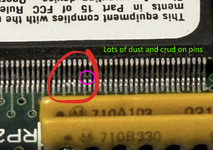
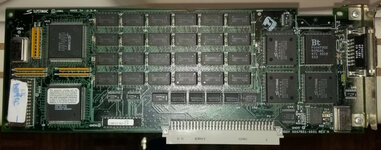
I will also confirm when I locate my boards. But, original and later rev Thunder/24 (circa 1992, etc.) definitely had intentional solder bridges. Ideally, the bridges could have been integrated at the pad level, but weren't...or I seem to have some dim memories regarding this problem --
1. Early Thunder/24 boards had EMI issues with screen stability/jumpiness during computer activity -- especially hard drive accesses. Floating lines may have been a contributing factor for SMT02 (graphics controller) stability. So, if the bridged pins ohm to ground, then that may explain it. it could have been to keep them from floating and causing internal EMI-related stability issues.
2. Even though SuperMac boards had similar designs -- like Thunder and later PDQ Plus et. al. (Thunder without the RAM slots and a gimped ROM to reduce performance), rev changes to later boards didn't necessarily propagate backwards to earlier designs. So, there may have been some remaining issues that might have been fixed in PDQ Plus that remained in Thunder/24. So, if there is no bridging on SMT02 on PDQ Plus, that indicates that the PDQ Plus rev incorporated changes that Thunder/24 did not have.
3. There may have been something about dev/future options vs. short-term manufacturing rework that had to do with not putting the bridges in at pad level. Hmmm...a bit hazy. Oh, maybe it was similar to #2 above, where the manufacturing process was already in place and it wasn't worth the overhead to fix the issues, roll the rev, retest, etc. vs. other more pressing development issues. In startups like SuperMac, there were always too many projects and never enough people or time to maintain the breakneck pace of new product releases.



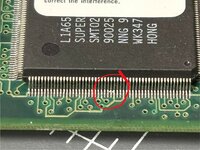
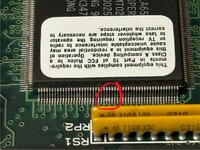
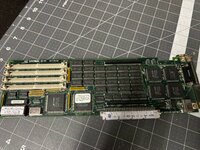
 You can also use hot, soapy water, then rinse with IPA - whatever works. Dry thoroughly (use compressed or warm air, if available). Then, inspect for any residual debris shorts -- hopefully no longer there...and the crud should also be gone.